The beautiful, together!
I treat a child — even the very youngest — as a person who has the full range of feelings, no less than an adult. In childhood a person is especially open and soaks up the world like a sponge, still unable to tell good from bad. That is exactly why the first encounters with music matter so much: they are the first seeds a child will carry through their whole life. I see my task, above all, as touching a child's soul gently. This is the beginning — and it must be made truly bright.
Do you want to help your child come to love music and begin to understand the wonderful world of sounds, to feel joy in touching art? Whether your child is very little, of school age, or a teenager — we will choose the best path for a steady mastery of music: with pleasure, at a comfortable pace, and in a space without pressure or judgement, developing thinking through music.
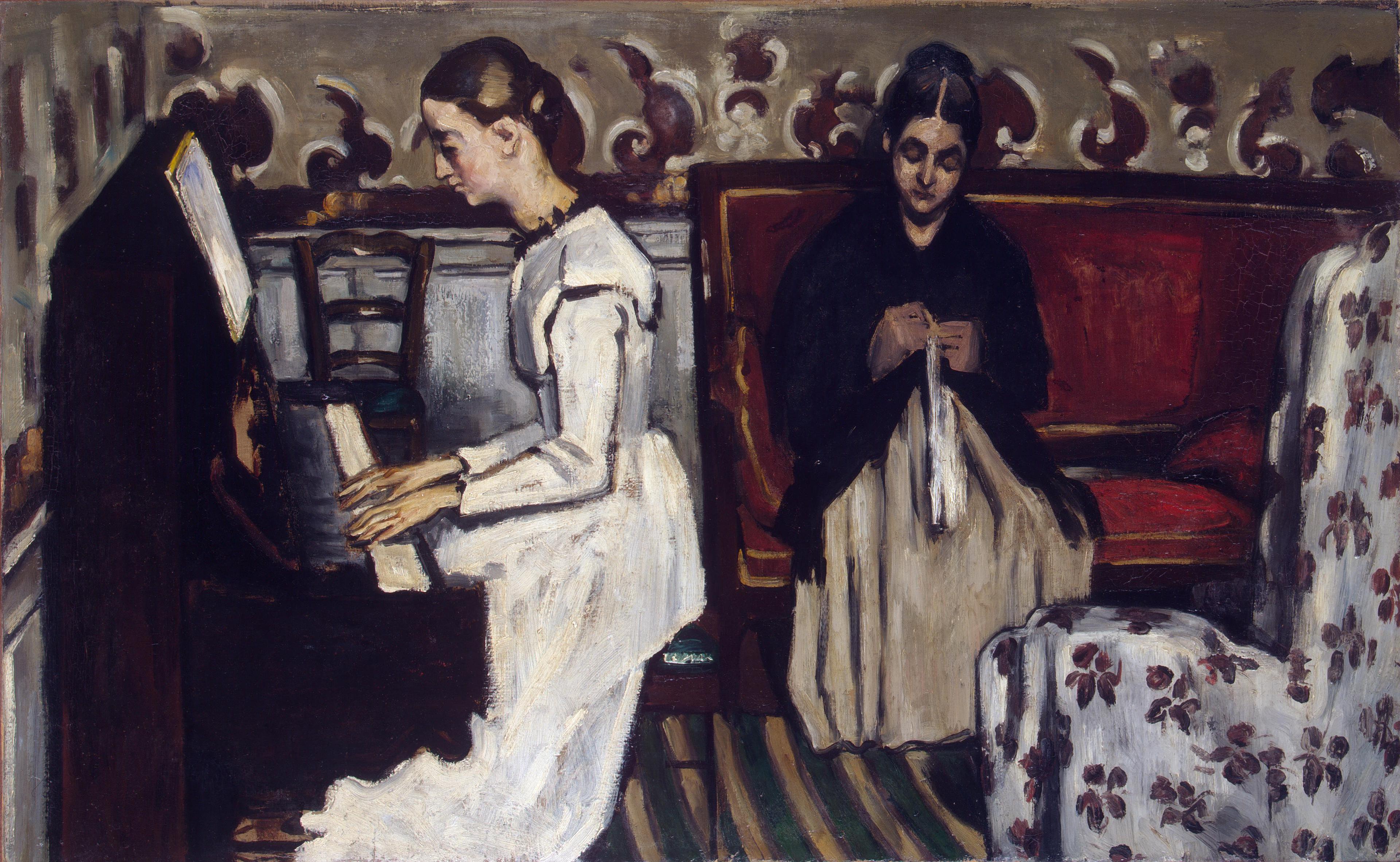
P. Cézanne, Girl at the Piano, c. 1869
For Which Ages
I work both with complete beginners and with students who already have some experience.
4–7 years
First steps in music — through play, imagination and images, without criticism or pressure.
This is the age when the future foundation of the personality is laid: if you build well, the building will be strong and reliable. The introduction to music goes gently, through images and various playful formats, with great warmth and patience. We do not "cover a curriculum" — we awaken a love of music, develop a sense of rhythm, emotional intelligence, and the very joy of sounds.
8–12 years
Developing the ear and musical thinking — through favourite music, with respect for the child's growing independence.
The transition toward adolescence is underway: imagination gradually gives way to rational thinking, and peers, teachers and one's own achievements become more important. In a space without judgement or pressure, at a comfortable pace, the student masters musical concepts and skills and learns to work — on the music they like. I help them not to memorize but to understand: what they want to play, why and how — and to find the answers themselves. This is how awareness and self-confidence are born.
13+ years
Learning with respect for the teenager's inner world. Mastering more grown-up musical concepts.
A teenager goes through one of the most difficult periods: the psyche is forming into an adult one, and feelings and relationships with loved ones change. At this time it is especially important to have an adult nearby who listens, does not pressure, and helps them find their own path. We study at a comfortable pace and on the music that the teenager holds dear, with respect for their individuality, developing awareness and gradually preparing them for grown-up, free music-making.
“Yuriy is a very attentive specialist, finding a way to engage with a restless child, captivating him with a world of music and playful elements. We've had nothing but positive experiences, and we'll be continuing our lessons.”
find this review on profi.ru
What You Can
Learn
Performing music,
piano technique
The ability to play favourite pieces beautifully and everything needed for it: above all — mastering the artistic image of the piece, and then hand positioning, freedom of the body, command of technique — from the first steps to ever more complex tasks as the child grows.
«The word "technique" comes from the Greek "technē", and "technē" meant art.»
Above all we work on the musical image — the mood and feelings of the piece — while technical devices serve its expression, not mechanical drilling. The child gradually learns to command their body freely, taking their individual features into account. For the youngest this happens through play and images, and the difficulty of the tasks grows together with the child — from the first steps to serious repertoire.
Developing thinking,
understanding music
Developing artistic thinking: the child learns to understand the mood of a piece, what feelings they want to express when playing it, and how the listener hears them. Along with the music, the personality itself grows.
«My main goal is not to raise outstanding musicians, but to raise good people with beautiful hearts. Music is only a path to that.»
Music is the language of the soul, and the main thing a child learns is to speak in it, not just to press keys. It is precisely in childhood that the foundation is laid, so it is so important from the very start to establish a healthy and conscious attitude toward music and toward oneself. I help the child understand their own feelings and what they would like to express with them, and I develop taste and artistic thinking. For the youngest this happens through images and play; for teenagers — through an ever deeper understanding of themselves. This is how music becomes not a burden, but a way to grow, feel and open up.
Music notation,
reading music
The ability to read music freely and meaningfully — to see living music in it, not just mechanical signs. For the youngest — through play; for older students — ever more confidently and independently.
«You must reach the point where you can understand any music by reading it with your eyes.»
The main task is not the mechanical ability to see notes, but the desire to play and to take in more music and images. That is why we also work on motivation: the more a child wants to inhabit new artistic roles, the more naturally they read new music and take pleasure in it. With children we turn reading music into a game, so that it becomes not a chore, but a key to beloved music and to growth.
Music theory,
solfège
The ability to hear and understand the musical language: notes, motifs and phrases, intervals and chords, mode and key. By ear and consciously — this gives a deeper understanding of music and a more beautiful performance.
«There is no theory. You need only to listen. Pleasure is the law.»
Understanding the elements and form of a composition — above all by ear — is a necessary condition of any good performance. First and foremost, it makes it possible to grasp the artistic intent of the pieces. Just as in language it is above all the meaning of words that matters to us, not only how they are spelled and read, so in music, theory serves a deeper and more inspired performance.
Teaching method
«Music is the language of the soul; it is the realm of feelings and moods;
it is inner life expressed in sounds.»
A dialogue without pressure or comparisons — through play
↓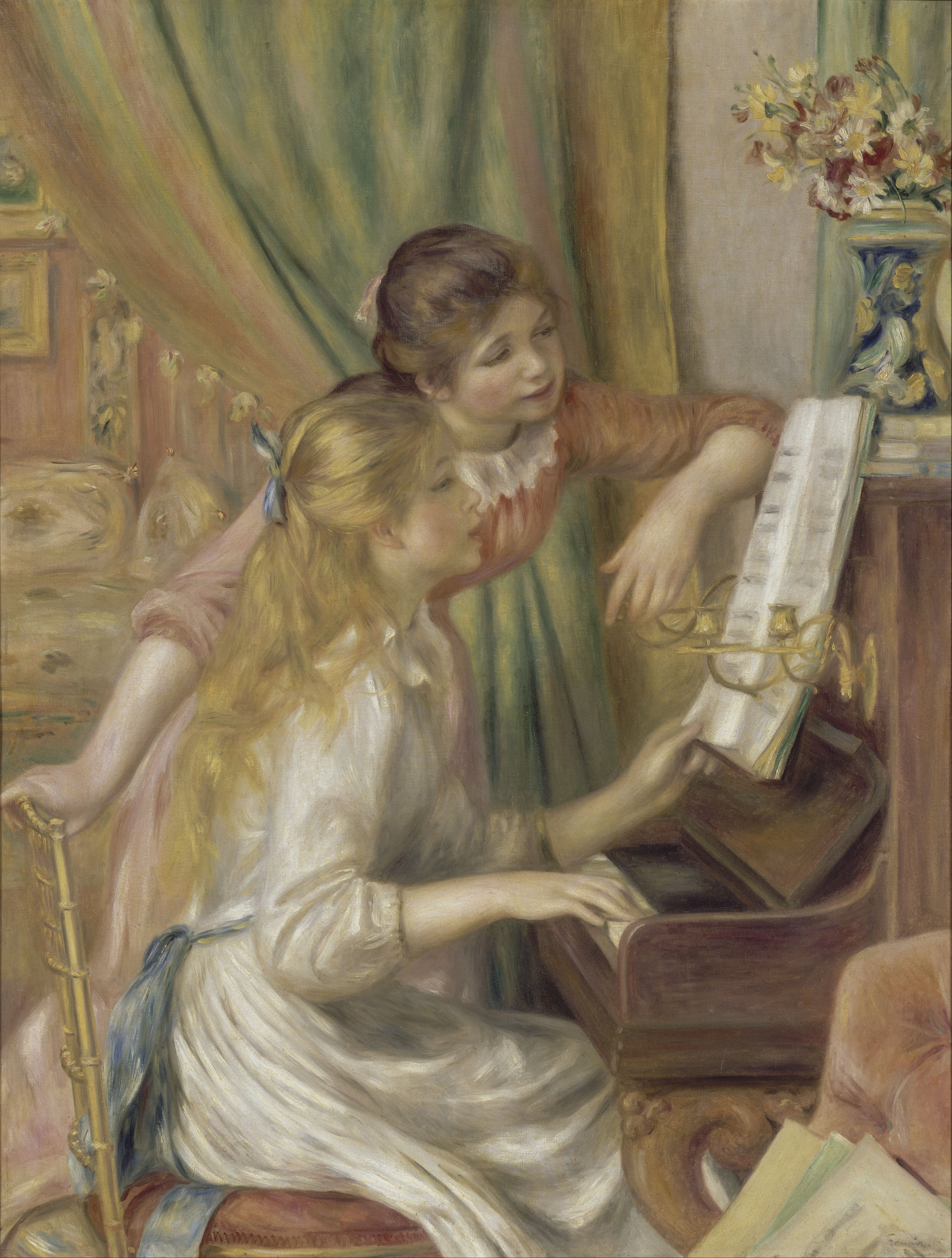
A. Renoir, Girls at the Piano, 1892
One of the main goals is for the child to fall in love with music, to play with pleasure, and not to be overloaded by the complexity of the process. Freedom and imagination. The music the child likes.
Gradually, as the child grows, the tasks become more complex, with more attention given to the student's independence and to developing their ability to achieve results and test their strengths.
Frequently Asked Questions
You can start at 4–5 years old — at this age lessons go through play and images. But it is not too late to start at any other age either: for each period there is its own best approach.
An ear for music and musical aptitude develop in any child, regardless of natural predisposition. The idea that a special "innate ear" is needed is a myth. Interest and gentle support matter far more.
Yes. I do not suppress a child's energy but channel it into music — through play and interest. This is exactly how it becomes possible to engage even the most restless students.
No. I work without pressure or criticism, in a safe space. My first task is for the child to come to love music, not to fear it.
At first it is enough to simply begin, and I will help you decide on the choice of instrument. Home practice is arranged individually and in a manageable amount — the main work happens in the lesson.
“Wonderful teacher, my child is delighted. Thank you!”
find this review on profi.ru
The Studio
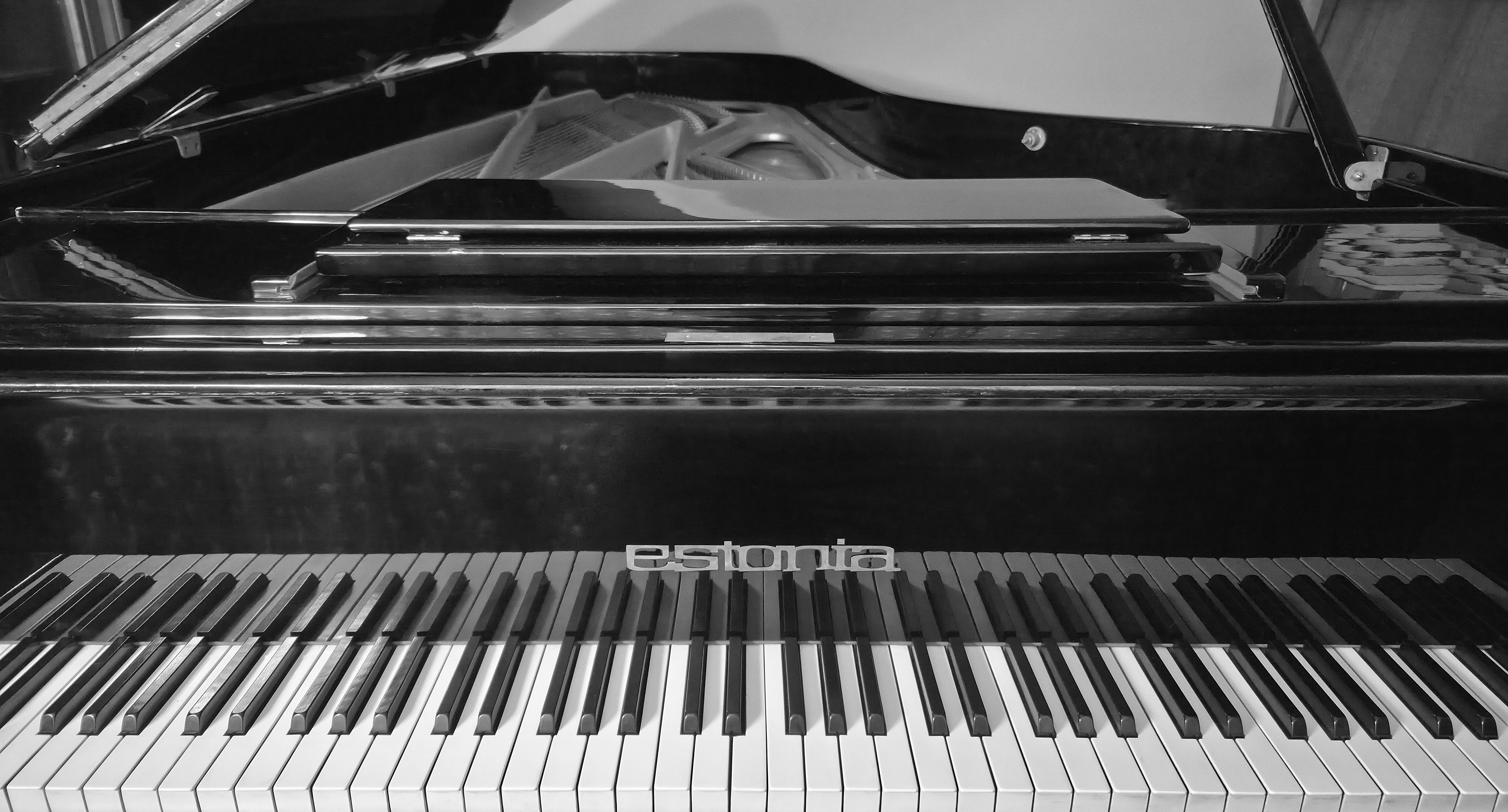
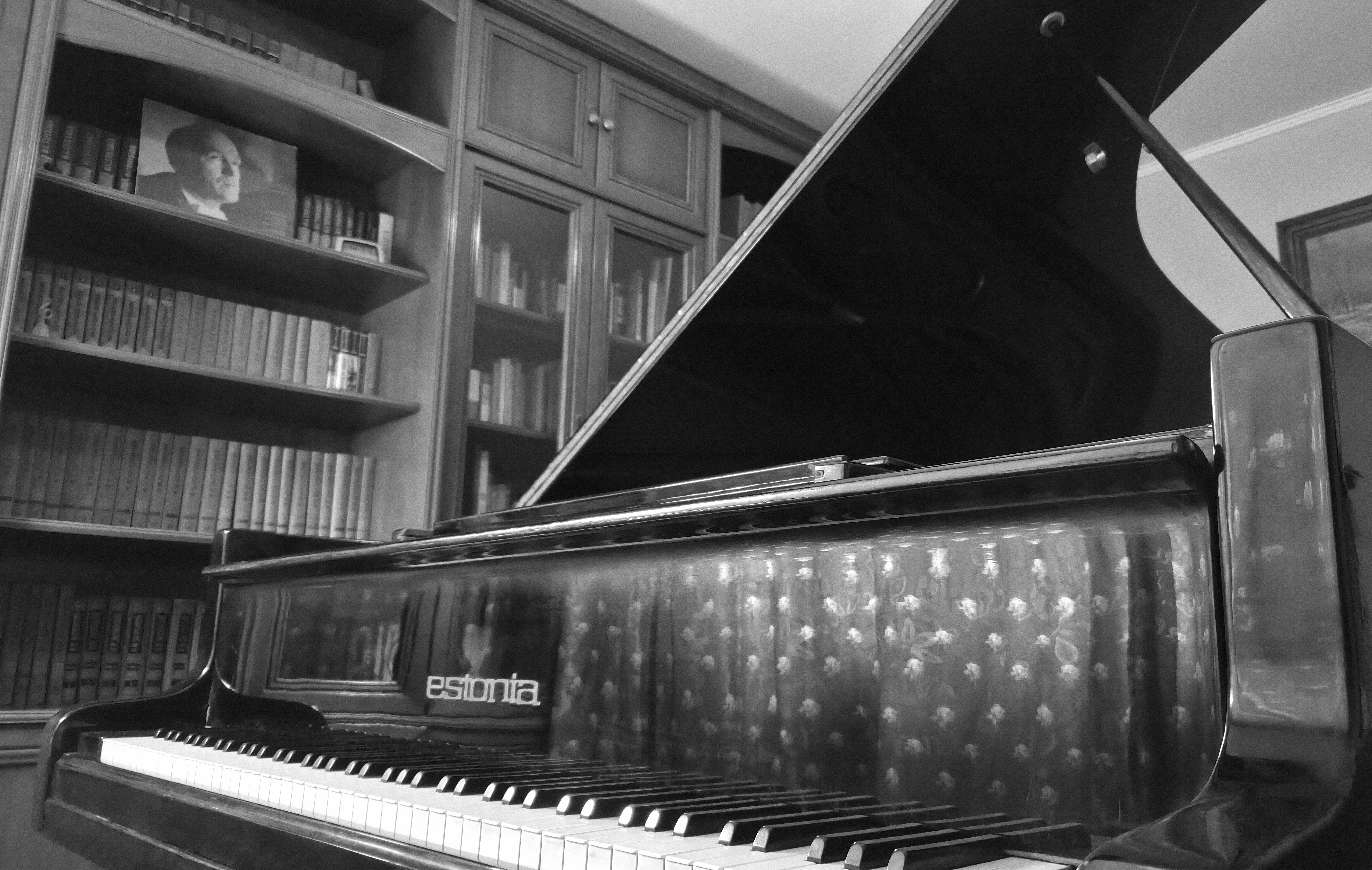
The studio is located near Akademicheskaya metro station (a 10-minute walk) or Krymskaya metro station (the tram runs practically to the door). For your convenience there is a separate waiting room where accompanying adults can wait comfortably for the child. Lessons take place in a separate room with a high-quality concert grand piano, where nothing will disturb the child's immersion in music.
Lesson Details
Format
In person or online
Duration
30–50 minutes, depending on age
Price
40 USD
Booking / Contact
The best way to start is with a free 20-minute phone consultation, where we can discuss your child's particulars and wishes, answer any questions, and figure out whether I can be of help.
Book a Consultation
Leave your details and I'll call you back (your information is never shared with third parties).
How to Reach Me
Address: Bolshaya Cheryomushkinskaya St., 20, bldg. 4, Akademicheskaya metro station, Moscow
Phone: +79096900776 (call, or Max, Telegram, WhatsApp)
Email: yurgus2022@gmail.com